Thursday, November 13, 2014

DEFINING MISCHIEF


     Good character.  As parents, grandparents, aunts and uncles, it needs to be modeled.  No question.  It’s our job.  Our duty really, to hand over the reigns to a kind and decent next generation.  We spend a lot of time on the “do’s”.  Do your homework.  Do your chores.  Do your best.  And we put a whole lot of energy into those “don’ts.”  Don’t lie.  Don’t cheat.  Don’t steal.  All good stuff.  All necessary.  Reinforcing the basics.
    Now, these do’s and don’ts are usually black and white.  Clear-cut.  But most of what we do or don’t do doesn’t fall into either camp.  So, what about the grey that makes up most of the middle ground between these two worlds?  There’s a lot of grey out there, just waiting to seep into your child’s day.  And temptation?  It feeds on kids for sport, waiting for them to be impulsive.  Or dared.  Or teased.  Or pressured.   How far can they swim out into those grey waters before they are pulled in by darker currents?  This is tricky business, made all the more complicated by the age of cell phones and social networking sites.   And sometimes our solution is to force-feed them more don’ts.  Buckle-down.  Get tough.  Show them who’s boss.  It’s called for.  Sometimes.
     But, what about something else?  Another possibility.  What about controlling the chaos?  Define the mischief.  If you want to lessen the odds of serious trouble, then define mischief.  Present mischief as a smart alternative to being bad; to momentarily break free of all the restrictions without doing any serious damage or harm.
     “Pssst.”  My twelve year-old gives me a curious look.  “See that guy over there,” I whisper.  Still a little baffled, she nods.  “He needs some pudding.”  When the man turns his back to us in the grocery store aisle, I quickly place two small boxes of instant pudding into his cart and wheel away.  Grace giggles.
     “That guy needs muffins,” she whispers to me just a few aisles later.
     “You think?” I ask.  She nods, very seriously.
     “His doctor says he’s not getting enough bran.”  As the man bends down to compare prices on canned gravy, Grace quietly places the bran muffins into the stranger’s cart and off we go.  We are now safely in the grey.  The key word here is safely.  Mischief.  No harm.  No damage.  Just wisps of chaos.  Letting off steam.  Breaking rules of no great consequence and free from the dark current of bigger and bolder trouble.
     When I look back around, Grace isn’t anywhere in sight.  A few minutes later, I see her hustling across an aisle with some sort of tube of lotion.  She mouths some sentence to me.  I am only able to make out the key words, “foot cream” and “bunion”.  It’s about all I need to know.
     While we’re paying, I look around and notice a few confused people staring strangely at items in their carts.  Grace and I giggle.  She points out that I was right about the guy with the pudding.  He’s a fan and bought it without a second thought.  While I’m laughing about the guy with the pudding, I pull out of my cart what looks to be an industrial sized bottle of pills intended to relieve joint pain. I turn to Grace.
     “You’re aging rapidly,” she says.  “You must have forgot to put it on your list.”
     We leave the store in small spurts of laughter.  My daughter had waded out into the grey with me.  I got to define the grey.  My terms.  My boundaries.  For a few moments, there were no do’s.  No don’ts.  The chaos controlled.  For now.  I might be simply biding my time.  But for a moment, I have offered the smart and healthy alternative to bad behavior.  We are unhinged.  Reckless, but in very small degrees.  Objective achieved, though.  Out here in the grey, we are still far enough from our do’s and don’ts to know just where it is still safe to swim.


P.S. ---- The daughter mentioned above is several years older these days, and still fully understands the art of becoming unhinged in the tiniest of degrees.
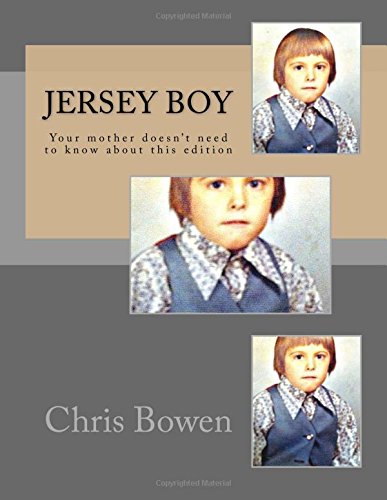


New Memoir, Jersey Boy, now available


If you're enjoying the blog, here's a book I recommend. "Our Kids: Building Relationships in the Classroom," is available at Amazon.

Tuesday, October 28, 2014

AND THE TREE WAS HAPPY


     “And the tree was happy,” I read as I closed the book.  When reading books aloud to kids, timing is everything and I’m pretty sure I nailed this one.  If you’ve never read, The Giving Tree, you really are missing out.  Not much to look at.  Sparse, pencil sketches.  Just a handful of words and several of those are repeated as a refrain, an eloquent, quiet mantra of sorts.
     I have read this book to all age groups.  Kids usually recognize the selfless tree in others.  Many connect the tree to a parent or grandparent.  I like to think that they walk away from the book with a deeper sense of gratitude for the people in their lives.  Maybe not.  Who knows?  Sometimes, older kids go a bit grander.  They see the tree as a Christ figure.  And, an even small group make the tree-wood-cross connection.  Once, a child even took note of the wreath of leaves the child makes in the story and made the comparison to Cesar.  Again, a story so simple. Yet it works.   Every time.  All ages.
     After I finish my reading and after we run through all the thoughts and connections, I hand the book to Erin.
     “Here,” I smile.  “I believe this belongs to you.”
     “No,” she says, confused.  I look at her, with an equally confused expression.  I open the book and hand it to her.
     “Hmmm…It has a note written on the inside cover, addressed to you.  It is definitely your book.”  Erin smiles.
     See, a few weeks back, Erin had mentioned The Giving Tree as being her favorite book.  She seems to have a love/hate relationship with this title.
     “I loved that book when I was little,” she explained.  “I used to check it out all the time from the library.”
     “Do you own a copy?”  I asked and she laughed as if owning a book is an odd concept.
     “No, it was a library book.  And when I would bring it home, I couldn’t get nobody to read it to me, but I kinda figured it out anyways.”
     Yeah.  This seemed like a no-brainer.  Everybody needs to own a copy of a favorite book.  Really, everybody needs a great many books, but a favorite title is a good place to start.  And, it feels like a chance to right a wrong of sorts.  A favorite book gets checked out of the library all the time, yet no one read it to her.  Books then become a source of pain.  So?  Books and school become a source of pain to be avoided at all costs.  Maybe.  Maybe not.  Maybe that’s just too neat.  Too easy.  No matter.  Owning a favorite book is still a fine place to start.  I thought quite a bit over my note on the inside.  Here’s what I came up with:
Dear Erin,
Words matter.  The words we speak.  The words we sing.  The words we read and write.  Sadly though, when we read and write less and less, our pool of words becomes smaller and smaller.  Our vocabulary shrinks.  In time, with fewer and fewer words, our voices can become very small.  That would be a shame if it ever happened to you because you are smart and creative and have a lot of important things to say.  I hope you feel the same way.
     Will this have an impact?  No clue.  But, for $12.95, it was worth a shot.  No harm done in being kind.  The truth is, with kids, I never know what will stick, and what won’t.  Kids have returned to me years later, and have thanked me for things I said that I honestly no longer remember saying.  I think it’s a Garrison Keillor quote that says, “Nothing done for children is ever wasted.”   I try to live by that one when I can. 
     A few days later, I notice that The Giving Tree is sticking out of Erin’s backpack.  It already looks worn from use.  Multiple readings, for sure.  And in this, the tree was greatly pleased.


New Memoir, Jersey Boy, now available


If you're enjoying the blog, here's a book I recommend. "Our Kids: Building Relationships in the Classroom," is available at Amazon.

Wednesday, September 17, 2014

MASCARA EMERGENCY


     She sort of stumble-steps into the room.  Mouth slightly ajar.  Jaw lax, but still connected.  If this were a movie or high-end cable television, this is the body language and facial expression that suggests that a character, key to the plot, has been stabbed or shot in the next room. 
     “Honey?  Are you okay?”  I ask as if talking her in from the ledge. 
     “Can you get my mascara from the car?” she asks.  Nobody has died and nobody has been taken. 
     “The car is in the driveway.  It’s about ten steps beyond that door.  You can get it yourself.”  The look of an impending brain aneurysm does not leave her face. 
     “But, I don’t have shoes on.” 
     “Well we’re leaving in ten minutes, so you will need shoes very soon.  You should probably prioritize.  First, solve that shoe problem.  Then you can tackle the massacre dilemma.”
     Five minutes later, one shoes has made it on.  Apparently, the right shoe is a bit trickier.  She looks up, helpless, as if her last wish on this earth must be granted so that she may go gently into that good night.
     “Please get my mascara,” she quietly pleads. 
     “No, it’s not important.”  Snap!  The trance is broken.  With those words blood, boiling blood at that, has returned to her face.
     “It IS important!”  I have used the good make-up’s name in vain and probably need to be stoned.  But, I cannot go without making my point.
     “No.  It is NOT important.  Never in the history of human breath has a doctor yelled, “He’s bleeding out!  Dammit, where is that mascara I ordered?!”  Her eyes roll deep into her skull.  I press on.  “Never has an historical account ended with the words, “ And at long last, a week’s supply of mascara finally arrived and the war was won.” 
     “Fine.  I’ll get it myself,” she says in that air of annoyance most twelve and thirteen year olds have mastered, but she is still a shoe short of a full load so she must hear my rant’s finale.
     “Now.  Now, let’s break down the painfully unimportant world of mascara.  If we were to rank mascara needs in order of importance, I would guess maybe models getting paid to work would be high on the list.  Someone getting ready for an important job interview might be up there.  Someone who is seriously ill and is trying to look a little healthier for visitors would rank pretty high, I’m guessing.  So even in the wasteland that is the world of mascara, your mascara needs don’t even register.  Insanely unimportant.  Really, nonexistent.  I can only think of one thing more unimportant that the mascara needs of a twelve year old.  Do you want to know what it is?”  Her eyes roll back into her head repeatedly like the wheels in a slot machine.
     “No,” she says flatly. 
     “See, I think you do.  I think you’re at least a little bit curious.”
     “I’m not.”  I dangle the keys just out of reach.  “Fine,” she surrenders.  “What?”  I clear my throat for effect.
     “The only thing less important than the mascara needs of a twelve year old is the mascara needs of an eleven year old.”  I pause.  Her eyes have rolled so far back in her head; it is possible that Bayou Voodoo is involved somehow.  I need to say something to wrap it up.  “Thus ends the lesson,” I say in a tone that conveys victory. 
     She snatches the keys from my hands and stomps out.  Really, she is only half-stomping, as that second trickier shoe has not been fully secured onto the back of her heel.  My mascara rant has put us behind schedule just a bit, but it had to happen.  And, I am counting it as a victory.  Sure.  The eye rolls made me question my self worth a few times, but I trudged onward.  It’s a small victory.  There have been many battles to date.  Many more to follow.  But vigilance is key.  I must maintain my place as a worthy foe so that we may come out stronger and still intact on that grand day when puberty’s wicked grip safely returns the child I raised back to me.  Until then, let the ranting and eye rolling march on.


If you're enjoying the blog, you may enjoy these titles from the author.  Happy Reading!


New Memoir, Jersey Boy, now available


If you're enjoying the blog, here's a book I recommend. "Our Kids: Building Relationships in the Classroom," is available at Amazon.

Tuesday, August 5, 2014

NOT KNOWING ANYTHING


     Sometimes, it can take a lot of work to convince people that you can’t do anything.  Still more, if you want them to think you know even less.  “I don’t get it.”  “I don’t understand.”  “This is too hard.”  “This is boring.”  “I don’t care.”
     I don’t care.  I don’t care is very misleading.  What a kid really means to say is, “I can’t afford to care.”  To care means being set up for bigger failure and greater frustration.  Not caring lowers the bar, the buy-in, and the brunt of the anguish.  And if you’re in eighth grade, this anguish has been your burden for a long time now.  Many of those struggling at this stage, probably had that moment of realization in third or fourth grade that they weren’t swimming.  They were sinking.  Treading water is tiring business, so you surrender and sink.  It’s a form of relief.  And, if a teacher thinks that this is just a reading battle, then they are sorely off base.  For some of these kids, reading doesn’t even make the top three.  Reading was just an unintended casualty.  It’s all uphill against poverty or parenting.  Abuse or neglect, maybe.  Learning disability gone undetected. 
     Marcella was all about not knowing.  To help build that buffer, Marcella would almost brag about what she didn’t know. 
     “I don’t know none of that,” she says with a touch of sarcasm for comic affect.  Tease yourself to render the teasing of others’ ineffectual.  I did the same thing as a kid for being short.  The notable difference here is that being short eventually becomes pretty unimportant and the self-deprecating jokes unnecessary.  Knowing how to read and write well never becomes less important, and that self-imposed bar can stay low for a lifetime.  It can reach across generations.  So, she’s at it again with this sarcastic routine of not knowing. 
     It’s the anniversary of the attack on The World Trade Center.  We start with pictures.  Small videos.  A few news clips.  Our reading is a retelling of the day from a fire fighter’s perspective.  The purpose for reading is to make connections to the article.  How does any of the information or emotions from the reading connect to you?  Right away, Marcella’s hand goes up.  She doesn’t wait to be called on.  This is just our ritual, so she skips a step ahead.
     “I can’t do this,” she blurts out.  “I ain’t got nothing in common with no fire fighters.”
     “Well, the fire fighters feel responsible for the people around them.  Have you ever felt responsible for somebody else?  Have you ever babysat?”  She’s the oldest of several.  I feel certain there is a link here.  It’s probably one she won’t cop to, but always worth a shot.  Surprisingly, she nods and actually answers.
     “I felt responsible for my mom last year.”  Immediately, my mind goes to illness.  I feel certain that Marcella has cared for a sick or dying parent. I don’t want to, but I ask.
     “How so?”
     “One time I threatened to call social services on her ass, and she told me that if I didn’t make the call then I could be in charge for a week.”  Couple of things here.  No parent I know takes that threat seriously.  That bluff must be called immediately.  I know parents that dial the number and hand over the phone.  That’s a balance of power moment, and it must be squashed.  Unless, of course, you’re a parent with something to hide.  This sounds more like a “something-to-hide” scenario.  I thought I had stumbled onto a tough moment when I thought she had cared for her dying mother.  But this may be worse.  This is the unknown.  Could be far worse, in fact.  My father was a cop for years and talked about all the hidden dangers in a domestic dispute.  Sometimes more dangerous than what’s out on the streets.  And much harder to read.
     So, I brace myself for what could be some very ugly business.  For the second time, I ask a question where I am not sure I want to hear the answer.  “So what happened?”  Marcella clears her throat.
     “Well, I said okay and I got to be in charge.”
      “What did you do while you were in charge?”  I think back to my own childhood and my mind instantly fills with all the ice cream and inappropriate movies I would have demanded that week.  Not really a fair comparison though, on account of me actually having a childhood worth remembering.
     “I set all new rules.  My mom wasn’t allowed to go out at night.  She had to stay home all week.  She had to do the laundry.  She had to fix us dinner.  And, she had to read to my little sister every night to get her ready for school.”  You could hear Marcella secretly trying to raise the bar for her little sister with the books.  “We even went to the library one night,” she adds. 
     Didn’t hear anything about ice cream and violent movies.  Just heard the basics.  A little comfort, and time.  A little stability.  I did hear loud and clearly why Marcella cannot afford to care about what goes on in my classroom, or in any classroom for that matter.  Pretty effective communication skills when you can show somebody your whole world in just a few sentences.  For a few moments, Marcella seems to enjoy the attention.  It’s attention that borders on positive, and it’s not how she has mastered getting her share of the spotlight.  She seems to like it, though.  She rides that wave for about fifteen full minutes, reads part of the article and takes a few notes.  But, it is fleeting.  Even Marcella, I am sure, knows that it is all very fleeting and tomorrow we will be right back to the art of not knowing anything.


If you're enjoying the blog, here's a book I recommend. "Our Kids: Building Relationships in the Classroom," is available at Amazon.

Tuesday, June 24, 2014

I AM MY FAITH


A disclaimer to start.  I tell this story because it has a moment of true beauty to it.  I’m just trying to do it some justice.  To get to that moment though, faith and culture may get caught in the crossfire.  This story is in no way a jab against any culture or creed.  The flip side is true as well.  I don’t write it as an endorsement of a particular faith or culture, either.  It’s just a moment laced with some beauty and I hope it is taken that way.  So, here we go.

     If Spanish is your first language, we’ve got you covered here.  It’s Southern California and we know our audience.  We’ve got instructional assistants, teachers, and other staff members that speak Spanish well.  Our English Language Development is primed for the native Spanish speaker.  Our number of families that check Latino on school forms hovers around 80%.  It just makes sense.
     If Egyptian is your native tongue, then we are a bit limited.  No one here speaks Egyptian, well or otherwise.  Of course kids are truly resilient, particularly when it comes to acquiring language.  I have seen kids with no knowledge of English pick up an amazing amount in a matter of months.  It’s a joy to watch when you get a chance.  Progress in over-drive.
     The new boy speaks only Egyptian.  And he is brand new to the country.  No language references.  No culture connections, either.  An island, of sorts.  But, his teacher is in luck.  There is a little girl in the room who speaks Egyptian and English.  She is second generation and the perfect liaison to help navigate the new student back and forth between both languages and some of the nuances that go with each.
     When asked to translate and answer questions for the boy, the young girl is only too eager to help.  She nods emphatically, and moves her seat next to him.  She is excited for the chance to illuminate a brand new world for somebody.
     First few days, the teacher notices nothing.  The boy never asks any questions of the girl.  When she attempts to translate, the boy works to ensure no eye contact is made.  Occasionally, he leans to the girl and whispers a few, short phrases.  Something is up.  At the end of the day, the teacher pulls the young girl aside.
     “I notice he doesn’t seem to ask anything.  Ever.  Is he understanding at all?”
     The girl nods.  “Some.”  He is very strong in math and understands during math.
     “What about the rest?
     “I’m not really sure,” she says, looking a little uncomfortable.
     “What’s the matter?”
     “He refuses to accept my help because I am a girl.”
     “Oh, I am so sorry that I put you in that situation.  I didn’t realize.”
     “It’s okay,” she says calmly.
     “But, I did notice him talking to you very briefly from time to time.”  The young girl nods.
     “Yes.  He is forbidden to talk to me.  His parents won’t allow it because I am a Christian.”
     The teacher seems confused by this.  “Then, what was he saying to you?”
     “He was cursing me because of my faith.”  By now, the teacher feels awful.
     “Again, I am truly sorry.  It was insensitive of me.  I deeply apologize for all of this.”  The girl just smiles.
     “No, no.  Don’t be sorry.  I want to thank you, really.”
     “Thank me?”
     “Yes.  I thank you for the opportunity.  My mother was so proud of me, because I used my faith.”  She smiles, ponders her sentence, and then corrects herself.  “I am my faith,” she says proudly.
     I have heard it explained that if you discard or ignore your values when they are tested, then you don’t really have any values.  You have something more akin to hobbies.  No hobbies here.  Just faith.
     I thought about ending with the lines about children inheriting the kingdom of God.  Good Bible reference.  But, I think the words from her own pure heart work best.  “I am my faith.”


If you're enjoying the blog, here's a book I recommend. "Our Kids: Building Relationships in the Classroom," is available at Amazon. Now available for the Kindle.

Tuesday, June 17, 2014

A PAT ON THE BACK


                                       New Release from Chris Bowen, The Bell Maker


     He needed it.  He really did.  Everybody rides him.  Sadly, it is as it should be.  See, it’s middle school.  Sometimes it feels like a modern day version of forty days in the desert.  The place to go to become young men and women.  The handholding is coming to an end.  And the world is waiting.  By the time they reemerge from our hallways and classrooms and quads, they must be responsible for themselves.  Their assignments.  Their work.  Their time.  Their management.  Sure, it needs to be age-appropriate.  But, they can’t come out the other end still thinking the world revolves around them.  They must leave with grander ideas and broader understandings.   And, in a bigger sense?  They must own their own hopes.  They must own their own dreams.  We can no longer dream their dreams for them.  So?  We ride them a bit.  Lean on them.  Sink or swim sometimes, and sometimes we let them sink before we pull them back up to the surface and try again.
     That’s Steven.  He can’t sit still.  Backpack is a disaster.  It’s the place important papers go to die.  The mouth is always moving.  So?  We need to ride him.  Remember, it’s just a few years stay, and then the world is waiting.  Practically everybody graduates from middle school.  Everybody moves on.  You do your time and you come out the other end either way.  But, that’s the last time that will ever happen.  You hear so much about standardized tests and results.  But, really, all of this is of equal value.  No.  Greater value.  There isn’t a multiple-choice answer to pulling your own weight or making your own way.  We will prepare them and test them.  But please be mindful of all of this “other” we know we must make happen.  And, in the middle of pushing on them, when the opportunity arises, you’ve got to build them back up.  And the obvious way to build them up?  Jousting.
     Of course, it’s jousting.  All educators know that challenging a child to a joust is the best and most recommended way to give a kid a boost.  It’s the big testing assembly.  We pull out all the stops.  A rock band made up of teachers has reworked the words to Queen’s, “We Will Rock You,” so it talks about how well our school will do on state testing.  Teachers throw fistfuls of prizes into the crowd.  To an outsider, it may seem a bit over the top, but if the kids know we think it’s important, many of them will think it’s important, too. 
     After the first round of prizes has been tossed and the band has finished its set, it’s time for the jousting.  The jousting arena comes from a company that rents this kind of stuff out for parties and smaller carnivals and fairs.  It looks like the floor to a huge bounce house.  Two, small circle podiums stand in the middle.  The jousters stand on the wobbly podiums.  They strap on their helmets and pick up the big foam jousting sticks.  First person to knock the other guy onto the treacherous bounce house flooring can claim victory.
     We have some good matches lined up that day.  Grudge matches between staff members from last year’s antics.  Counselor pitted against counselor.  The one that causes the crowd to stir is our vice principal verse our principal.  The clash of the disciplinarians.  Our VP proves victorious.  As the true face of discipline, there is a slight wave of disappointment with his victory.  But it’s not over.  Our vice principal still has one challenge left.  Steven.
     Steven has been chosen, allegedly at random, to battle our VP.  Now, our VP is well over six foot.  If you didn’t know he was such a nice guy, he might seem pretty menacing.  And then there’s Steven.  Steven very well may be the smallest guy in our school.  It’s like that in middle school.  Guys hovering just over four feet thrown in with guys well over six.
     Like I said, we lean on Steven.  Ride him.  And our VP no doubt has assigned him detentions, maybe Saturday school a few times.  He’s tiny and likes to talk.  And he doesn’t always have much of a filter.  So, plenty of kids are riding him too, and not for the right reasons.  It’s got to be a lot of long days for Steven.  He is shocked to hear his name.
     So are the kids.  Instantly, he is seen as lucky.  One out of fifteen hundred.  The kids start chanting his name.  After some shock wears off, he starts to beam.  It’s already the best day of school he has ever known and he hasn’t quite made his way to the jousting area yet.  Classmates high five him and slap him on the back as he bumps his little body through the crowd.  Kids seem to have instantly forgotten he was their favorite target just hours ago.  With kids this age, the tide can change in a flash.
     The helmet comes down over his eyes.  Steven has to stretch, practically crawl, to get up onto the podium.  Once he does, he stands in our VP’s shadow.  The countdown begins.  The kids chime along.  I can see that his little arms are struggling just to hold onto the jousting stick.
     “Steve!  Steve!  Steve!”  The kids chant.  When the buzzer goes off, you can see his strain to hoist the stick up past his waist.  He swings it, almost falling off from the weight of the foam.
     He does connect.  The pole brushes against our Vice Principal.  That’s enough, though.  Our Goliath does a fine acting job, flying his body into the air and onto the inflatable floor.  It’s obviously fake, but no one seems to mind, least of all Steve.
     He can’t pull his helmet off fast enough so he can take in the crowd.  For one glorious moment, he is in.  He’s accepted.  The kids accept him.  The teachers and the administrators and the counselors that are constantly pushing and pulling on him to walk the line, smile and cheer. 
     Our Vice Principal raises Steven’s hand in victory, graceful in defeat.  The kids love it.  It’s a good day to be Steven.  After about 150 days into middle school, it is finally a good day to be Steven.
     It’s true.  They are in middle school for such a short amount of time, going through the metamorphosis.  And it’s true that we must make them far more responsible.  As I watch Steven make his way back through the crowd, basking in a moment of fame that may not last until the day’s final bell, I know we can’t hold their hands anymore.  It has to be that way.  But sometimes, when they really need it, we can still let them know that they are loved.  We can still give them a pat on the back.


If you're enjoying the blog, here's a book I recommend. "Our Kids: Building Relationships in the Classroom," is available at Amazon. Now available for the Kindle.

Thursday, June 12, 2014

FREE AT LAST, FREE AT LAST!!


Good Morning,

The book that I have been quietly plugging at the end of each post is now ABSOLUTELY FREE!  Amazon has made the kindle edition free for the next five days.  I encourage you to read some of the reviews and download your free kindle edition today.  Thanks!


If you're enjoying the blog, here's a book I recommend. "Our Kids: Building Relationships in the Classroom," is available at Amazon. Now available for the Kindle.

Wednesday, May 21, 2014

LET'S ASK MR. LEE


                                       New Release from Chris Bowen, The Bell Maker


     He walks in.  He has a perfected strut already.  He’s thirteen and he looks around the room with his brash smile poised high in the air, expecting girls to blush and boys to cower.  He also has about eight new facial hairs in a few small clumps.  It looks like smudges, as if he’s been doing a little light chimney sweeping, but to him it bellows out, “I have arrived!  I am a man!”  These first flushes of puberty sometimes come with arrogance and a mean streak.  It’s usually temporary.  Sometimes it is not.  Sometimes it’s a more permanent way to approach the world.  Either way, it must be squashed.  Laid to rest.  Mix this mean arrogance with thirteen-year-old impulsive behavior and some rather offensive phrases can come popping out of their mouths.
     He takes a seat in the front row.  Dead center.  He does not sit here in order to better see the board or to improve the quality of his education.  He sits here to ensure he has the fullest possible audience.  Arrogance thrives on an audience.
     A few minutes later, the serenity of silent reading is broken.  I look to see that our new “man” has turned to the crowd and in an attempt to grow his fan base, is making faces for all to see.  Actually, not faces.  It’s just one face.  He is pulling back his eyes to make the well-known racist Asian eyes.  I stare at him.  Usually a kid stops at this point, but he has facial hair, so clearly he does not need to step down.  He elects to ramp things up a bit.
     “How do Asian people see?” He asks me.  The chuckles behind him build.
     “I don’t know,” I answer.  “Why do racist people talk?”  I ask back.  The chuckles subside. 
     “What?”  He asks rhetorically, mocking confused over-the-top hand gestures.  “It’s just a question.”
     “You’re right,” I say, sounding apologetic.  “That was rude.  I’m sorry for what I said.”  I’ve seen boxers and possums feign injury in order to allow that false feel of victory to creep in.
     “It’s okay,” he says almost triumphantly.  “I accept your apology.”  His tone gains a few more chuckles.  It’s almost as if he feels sorry for me, and is capable of empathy.  But he’s a few troubled times away from developing any sense of empathy for anyone.  Right now, it’s his world and we just live in it.  He turns back to the audience and does the face again.  “Seriously, does anyone know?  It’s just a question.”  His audacity alone is a big hit with the crowd.
     I sit down and start to write a note.  It’s caught his attention.  He rolls his eyes.
     “What?  Am I in trouble?”
     “No.  Not at all.  I just want you to get an answer to your question.  I’m writing a note for you to go next door and ask Mr. Lee.  He’s Asian.  Originally from Korea.  From the corner of my eye, I can see the color start to leave his face.
     “No, I don’t want to ask Mr. Lee,” he says.  His voice is vaguely pleading.
     “It’s no problem,” I assure him.  “He’s a nice guy.  I’m sure he’ll give you an answer.”  I go back to my note.
     “No, no.  I don’t want to ask.”
     “Why not?”  I ask.
     “Because,” is all he can say.
     “Because why?”  I ask.  No answer.  “Why don’t you want to ask Mr. Lee how Asian people are able to see? “  I pause.  “It’s just a question.”
     “I don’t know,” he answers after a while.
     “Yes.  You absolutely know.”   There’s another pause.  I may not be getting the chuckles, but you can easily hear a pin drop and I have my audience leaning out over the edges of their desks.  “Say it,” I urge, changing my tone.
     “You absolutely know why you don’t want to ask Mr. Lee how Asian people are able to see.  Say it.”  I hover close to the desk and don’t move.  And I won’t move until I get my answer. I am fully prepared to wait him out.
     “Because it’s racist,” he mumbles.
     “Speak clearly, please.”
     “Because it’s racist,” he says.  This time it’s loud enough for the room to hear.
     “Thank you,” I say.  I drop the empty slip of paper that was my alleged note unto his desk just to let him know I was bluffing.  “It’s not your audience, sir.  It’s mine,” I say for future reference. I pretend to study his face with mother-like concern.  “Looks like you’ve got some dirt on your face,” I say pointing to his small cluster of frail facial hairs.  He looks up.  Though it needed to be done, I do feel sorry for him for a moment.  Luckily, enough people along the way have taught me how to have a little empathy for others.


If you're enjoying the blog, here's a book I recommend. "Our Kids: Building Relationships in the Classroom," is available at Amazon. Now available for the Kindle.